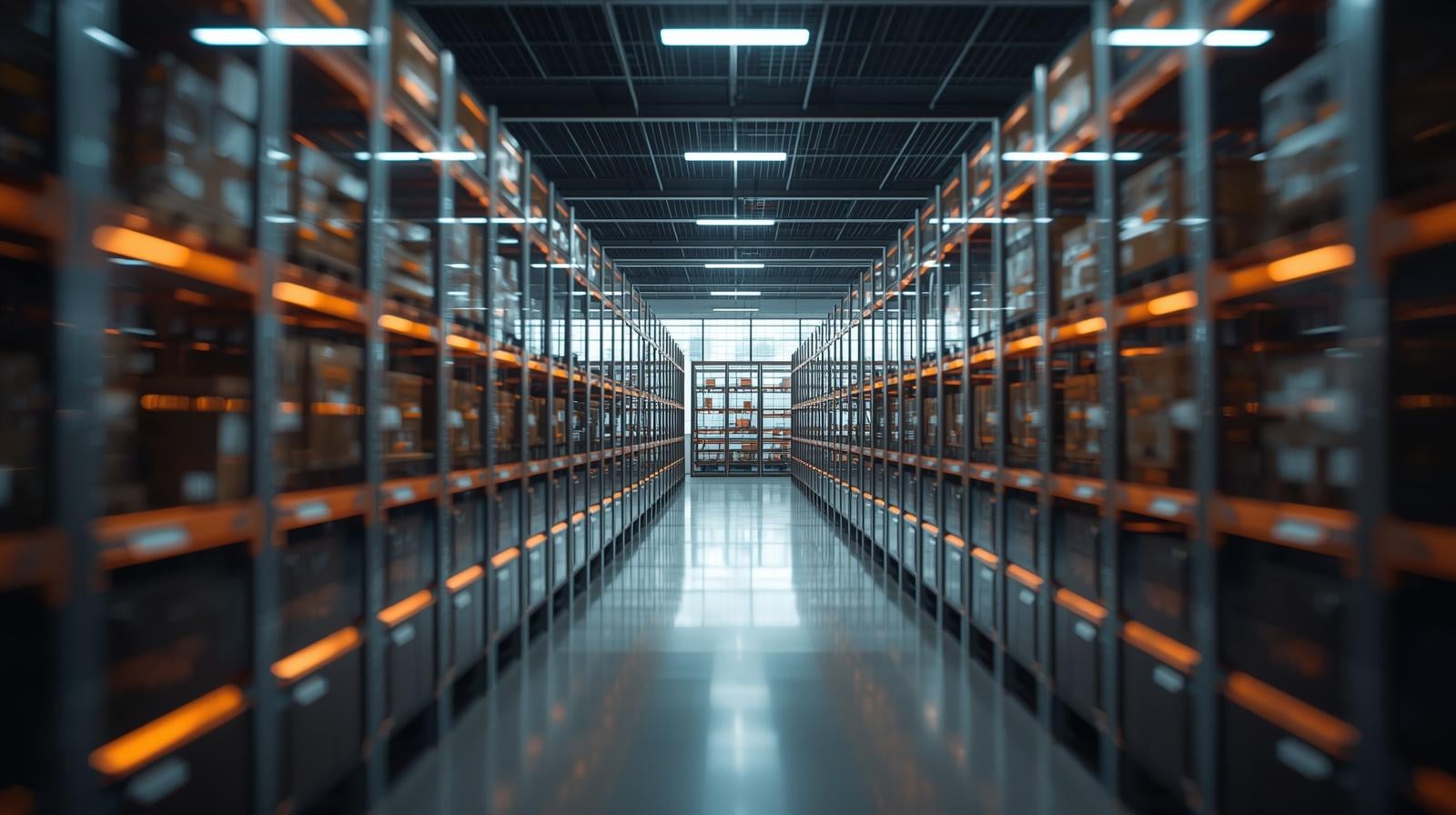
The B2B ecommerce landscape is shifting fast, and companies that treat their digital channel as a secondary priority are already falling behind. The most important B2B ecommerce trends in 2026 centre on one core shift: buyers now expect the same speed, transparency, and personalization from their suppliers that they get from consumer platforms. Manufacturers, distributors, and wholesalers that build their digital infrastructure around these expectations will capture market share. Those that don’t will lose accounts to competitors who make buying easier.
This post breaks down 7 concrete trends shaping B2B ecommerce right now, with practical examples of what each one looks like in an actual online store.
Why B2B Ecommerce Is Evolving Faster Than Ever
B2B ecommerce is no longer catching up to B2C. In several areas, it is surpassing it in complexity. According to Forrester, U.S. B2B ecommerce is on track to exceed $3 trillion by 2027 [STAT NEEDED for exact current figure]. At the same time, a Gartner study found that 80% of B2B sales interactions will occur through digital channels by 2025, a threshold we have now crossed.
The pressure is coming from multiple directions at once:
- Millennial and Gen Z buyers now hold purchasing authority at a large share of B2B companies, and they have no tolerance for PDF catalogs or phone-only ordering.
- Supply chain disruptions over the past several years forced companies to invest in digital infrastructure, accelerating timelines that would have taken a decade.
- Competitive pressure from Amazon Business and other B2B marketplaces has raised the baseline expectation for search, speed, and self-service.
The result is that companies we work with across manufacturing, distribution, and wholesale are not asking whether to invest in their ecommerce channel. They are asking how fast they can build it out, and how to build it so it scales.
Where B2C ecommerce optimizes for impulse and convenience, B2B ecommerce must handle contract pricing, multi-location shipping, approval workflows, and real-time inventory visibility. The technical bar is simply higher. The companies that recognize this early are building durable competitive advantages.
Trend 1: AI-Powered Search and Recommendations Are Coming to B2B
What it is: AI-driven search and recommendation engines are making it faster for B2B buyers to find the right SKUs, accessories, and reorder quantities without manual browsing.
Why it is happening now: B2B product catalogues are often enormous, sometimes hundreds of thousands of SKUs with complex attribute structures. Traditional keyword search fails these buyers constantly. AI-powered search tools can interpret intent, handle part number variations, suggest compatible products, and surface items based on past order history.
The same technology that powers Netflix recommendations and Amazon search is now accessible to mid-market businesses through platforms and third-party integrations.
What it looks like in practice: One of our clients, an industrial fastener distributor, implemented AI-powered site search that interprets technical specs and synonyms (a buyer typing “hex bolt 3/8 stainless” gets the right results even if the catalog uses different nomenclature). Within 90 days, their average search-to-cart conversion rate increased measurably, and support tickets related to “can’t find the product” dropped by roughly 40%.
For B2B, this is not a luxury feature. It is a retention tool.
Trend 2: Self-Service Portals Are Replacing the Sales Rep for Reorders
What it is: Dedicated buyer portals that allow customers to reorder, check order status, access invoices, manage multiple ship-to locations, and request quotes without picking up the phone or emailing a rep.
Why it is happening now: Research consistently shows that B2B buyers prefer self-service for routine transactions. According to McKinsey, more than 70% of B2B buyers say they prefer remote or self-service interactions over in-person sales for reorders and repeat purchases [STAT NEEDED for exact current figure]. Sales rep time is expensive and finite. Portals scale.
This mirrors a shift B2C went through years ago. When was the last time someone called a retailer to place a repeat order? B2B buyers are asking the same question about their suppliers.
What it looks like in practice: A wholesale electrical supply company we work with built a self-service portal on top of their ecommerce platform. Customers log in to see their contract pricing, their approved product lists, and their order history going back three years. Reorders take under two minutes. Their sales team now focuses on new accounts and complex technical sales instead of fielding “where’s my order?” calls.
The result is measurable: lower cost-to-serve, higher order frequency, and sales reps who are more productive on higher-value activity.
Trend 3: Personalized Pricing and Account-Based Catalogs Are Becoming the Standard
What it is: Every B2B customer sees prices, products, and promotions tailored to their account, contract, and buying history rather than a one-size-fits-all storefront.
Why it is happening now: B2B pricing has always been negotiated. What is changing is the expectation that this negotiated pricing is reflected in real time on the digital storefront, not communicated separately by a rep. Buyers who log in and see generic retail pricing lose confidence immediately. They either call their rep (adding friction) or assume the digital channel is not for them.
Platforms like Adobe Commerce (Magento) have supported account-based catalogs and tiered pricing for years. What has changed in 2026 is that mid-market companies are now deploying these features as table stakes, not enterprise differentiators.
What it looks like in practice: A building materials manufacturer we partner with runs over 200 distinct price lists tied to dealer tiers, geography, and volume commitments. When a dealer logs in, they see only the products they are approved to buy, at the exact pricing their contract specifies. New product launches appear in their catalog only after their account manager activates them. No confusion, no pricing disputes, no PDF updates.
For manufacturers and distributors managing complex channel structures, this is not optional. It is how you protect your channel relationships online. You can read more about how this applies specifically to manufacturers in [our ecommerce for manufacturers guide — Brief 7].
Trend 4: ERP and Platform Integration Is No Longer Optional
What it is: Real-time, bidirectional data flow between your ecommerce platform and your ERP, OMS, and WMS systems, so inventory, pricing, orders, and customer data stay synchronized without manual intervention.
Why it is happening now: As B2B digital order volumes grow, the operational cost of maintaining data in silos becomes unsustainable. A disconnected setup means reps manually entering web orders into the ERP, pricing errors when contracts change, and inventory oversells that damage customer relationships.
We see this as one of the most consistent pain points when we work with distributors. Orders come in online but fulfillment still runs through a separate manual process. It breaks at volume.
What it looks like in practice: One of our distributor clients runs a 60,000 SKU catalog with real-time inventory feeds from three warehouses. When their ERP updates stock levels, the ecommerce platform reflects that within minutes. When a customer places an order online, it flows directly into their ERP for pick and pack without human re-entry. Their order error rate dropped dramatically after integration. Returns and customer service contacts related to “wrong item” or “out of stock” orders fell significantly in the first quarter post-launch.
Integration is not a back-office concern. It is a customer experience investment. For distributors thinking through this architecture, our [ecommerce for distributors guide — Brief 8] goes deeper on the technical and operational considerations.
Trend 5: Headless Commerce Is Moving From Enterprise to Mid-Market B2B
What it is: A headless architecture decouples the front-end customer experience from the back-end commerce engine, allowing businesses to build faster, more flexible storefronts without being constrained by the platform’s default templates.
Why it is happening now: For years, headless was the domain of large enterprises with significant development budgets. That has changed. The ecosystem of front-end frameworks, APIs, and composable tools has matured to the point where mid-market B2B companies can access headless architectures without rebuilding from scratch.
For B2B specifically, this matters because buyer portals often need to do things that standard storefront templates were not designed for: multi-step quote workflows, custom order forms, integration with CPQ tools, role-based access for different buyer levels within the same account.
What it looks like in practice: A specialty chemicals distributor we worked with needed a front-end that handled highly regulated product data, safety data sheets, buyer certification requirements, and jurisdiction-based product restrictions, all within the ordering flow. A standard theme could not support that. A headless front end built on their existing commerce platform gave them complete control over the buyer journey while keeping the back-end commerce logic intact.
If your current storefront feels like a workaround for what your business actually needs, headless is worth a serious look. Our [B2B ecommerce platform comparison guide — Brief 4] covers the architecture trade-offs in detail.
Trend 6: Mobile B2B Buying Is Accelerating
What it is: B2B buyers are increasingly placing orders, checking stock, and approving quotes from mobile devices, and companies that have not optimized for mobile are creating unnecessary friction in their ordering process.
Why it is happening now: The same buyer who places a consumer order on their phone on Sunday morning is on a job site on Tuesday morning trying to reorder materials from their supplier. If that experience is frustrating on mobile, they call their rep or find a competitor who has figured it out.
Gartner research indicates that mobile now accounts for a significant and growing share of B2B site traffic. The gap between traffic and conversion on mobile in B2B is wider than in B2C, which means there is direct revenue being lost to poor mobile experiences.
What it looks like in practice: A wholesale HVAC distributor we work with analyzed their site data and found that 38% of their traffic came from mobile devices, but mobile conversion was less than one-third of desktop conversion. We rebuilt their ordering flow with mobile-first navigation, quick reorder from order history, and simplified checkout. Mobile conversion increased by over 60% in the following quarter.
The opportunity is real. The gap between mobile traffic and mobile conversion in B2B is where margin improvement lives right now.
Trend 7: B2B Buyers Are Choosing Owned Storefronts Over Marketplaces
What it is: Despite the growth of Amazon Business and similar B2B marketplaces, more buyers are actively preferring to purchase directly through supplier-owned storefronts, particularly when those storefronts offer the account features, pricing transparency, and product depth that marketplaces cannot replicate.
Why it is happening now: Marketplaces offer reach and convenience for commodity products. But B2B purchasing is rarely commodity. Buyers want their contract pricing, their account history, their approved product lists, and direct access to technical support. Marketplaces strip all of that out.
Suppliers who invested in their own storefronts and gave buyers compelling reasons to come directly, including better pricing visibility, faster support, and account-specific features, are seeing higher retention and larger average order values than those who defaulted to marketplace dependency.
This is also where sustainability and supply chain transparency demands are hitting hardest. Buyers in 2026 want to know where their products come from, what the environmental footprint looks like, and whether suppliers meet their own ESG requirements. Owned storefronts can surface this information at the product and order level. Marketplaces cannot.
What it looks like in practice: A packaging manufacturer we work with made the deliberate choice to invest in their direct digital channel rather than expand on a third-party marketplace. Their storefront shows buyers real-time lead times, full product traceability data, and sustainability certifications at the SKU level. Buyers who care about supply chain transparency now prefer their direct channel specifically because the information is there and easy to access.
The B2B ecommerce trends around marketplace versus owned channel are not about choosing one or the other permanently. They are about knowing which channel serves which customer relationship, and making sure your owned channel is strong enough to retain your best accounts.
What These Trends Mean for Your B2B Strategy in 2026
These 7 trends share a common thread: B2B buyers are raising their expectations faster than most suppliers are building to meet them. The gap between what buyers want and what they experience on most B2B storefronts today is not a technology gap. It is a prioritization gap.
Here is a practical way to assess where you stand across the 7 areas:
- AI search and recommendations: Can your buyers find the right product in under 3 clicks without already knowing the exact SKU?
- Self-service portals: Can a customer reorder, check their invoice, and get shipping confirmation without contacting your team?
- Personalized pricing: Does your digital storefront reflect each account’s actual contract pricing in real time?
- ERP integration: Are orders from your web channel flowing into your fulfillment system without manual re-entry?
- Headless architecture: Is your front-end limiting what your B2B buyer experience can actually do?
- Mobile experience: What is your mobile-to-desktop conversion gap, and do you know what is causing it?
- Owned channel strength: Are your best accounts coming to you directly, or drifting toward marketplace convenience?
If you have three or more “no” or “unsure” answers in that list, your digital channel is likely underperforming relative to what your buyers expect and what your competitors are building toward.
At MageMontreal, we work with manufacturers, distributors, and wholesalers who are in the middle of this build. Not at the beginning of the conversation about whether to invest, but at the stage where the architecture decisions, integration choices, and platform trade-offs actually determine whether the investment pays off.
If you want to understand where your B2B ecommerce infrastructure sits today relative to where it needs to be, a practical gap assessment is the right place to start. Not a sales call, but a structured conversation with people who have built these platforms before and can tell you honestly what you are dealing with.